


_1.png)

.png)


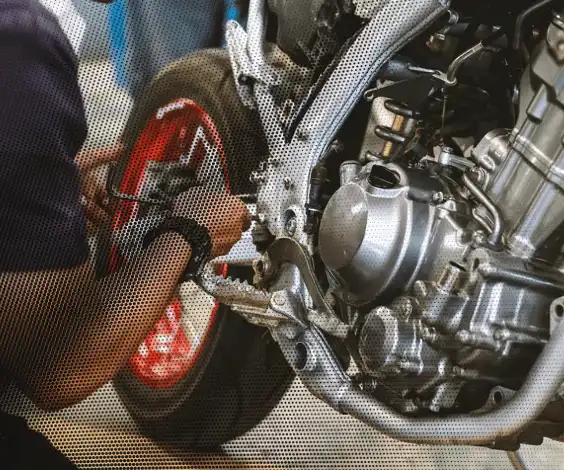


3D Printing Revolution: Manufacturing Custom Motorcycle Parts
3D Printing Revolution: Manufacturing Custom Motorcycle Parts
The advent of 3D printing technology has fundamentally transformed the landscape of custom motorcycle manufacturing. What was once the exclusive domain of specialized machine shops and expensive tooling is now accessible to individual builders and small workshops. This revolutionary technology enables the creation of complex parts that would be prohibitively expensive or technically impossible to produce through traditional manufacturing methods. From prototype development to final production parts, 3D printing is reshaping how we approach motorcycle customization and restoration.
Understanding 3D Printing Technology for Motorcycles
3D printing, also known as additive manufacturing, builds objects layer by layer from digital designs. For motorcycle applications, several printing technologies prove particularly valuable. Fused Deposition Modeling, or FDM, remains the most accessible technology, using thermoplastic filaments to create parts. This method works exceptionally well for brackets, housing components, and prototype pieces. Selective Laser Sintering, known as SLS, uses lasers to fuse powder materials into solid structures, producing parts with excellent mechanical properties suitable for functional applications. Stereolithography, or SLA, employs UV light to cure liquid resin, creating parts with exceptional surface quality ideal for aesthetic components and detailed prototypes.
The materials available for motorcycle part production continue to expand dramatically. Standard thermoplastics like ABS and PLA serve well for non-structural components and prototypes. Engineering-grade materials including nylon, polycarbonate, and PETG offer superior strength and temperature resistance for functional parts. Carbon fiber reinforced filaments combine the ease of FDM printing with enhanced structural properties, making them suitable for lightly loaded components. Advanced materials such as TPU provide flexibility for gaskets and vibration-dampening applications, while specialized high-temperature resins enable production of parts that must withstand engine bay conditions.
Applications in Custom Motorcycle Building
Aesthetic and Design Components
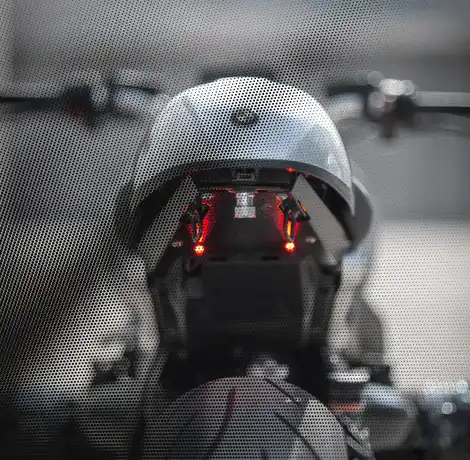
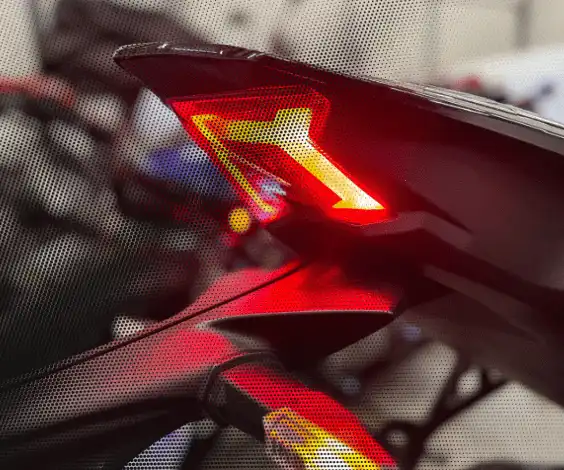
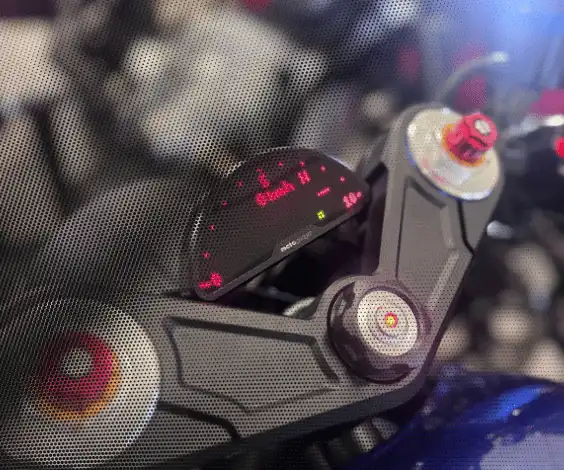
3D printing excels in creating unique aesthetic components that define a custom motorcycle's character. Dashboard housings and instrument clusters can be designed to perfectly match your vision, incorporating modern displays into vintage-style cases or creating entirely new design languages. Custom side panels and body work allow builders to achieve shapes impossible with traditional metalworking, enabling organic forms and complex surface details. Air intake covers and decorative engine components showcase 3D printing's ability to produce intricate geometries, from honeycomb patterns to biomimetic structures. Taillight and headlight housings can be tailored to specific LED arrays while maintaining design cohesion across the entire build.
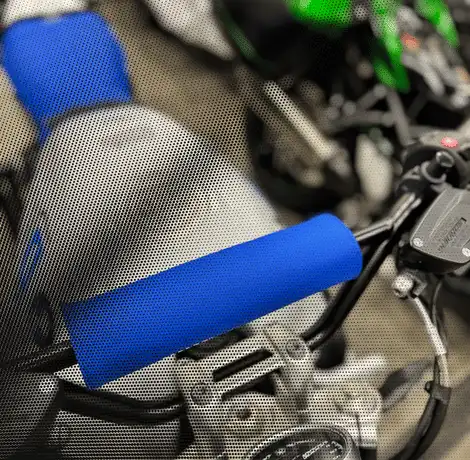
The technology particularly shines in creating one-off design elements. Custom emblems and badges can incorporate raised lettering, complex logos, and detailed textures that would require expensive tooling in traditional manufacturing. Handlebar-end caps, mirror housings, and control button covers provide opportunities to inject personality into functional components. For builders working with specific design themes, whether retro-futuristic, steampunk, or minimalist, 3D printing enables the realization of concepts that would otherwise remain as digital renderings or crude mockups.
Functional and Structural Parts
Beyond aesthetics, 3D printing produces genuinely functional motorcycle components. Mounting brackets and adapters solve countless fitment challenges, especially when installing modern components on vintage frames or adapting parts between different motorcycle models. These brackets can be designed with integrated cable routing, optimized material distribution for strength-to-weight ratios, and mounting geometries impossible to achieve through traditional fabrication. Electronics housings protect sensitive components from vibration, moisture, and temperature while allowing precise positioning of switches, displays, and connectors.
Air filter assemblies represent another area where 3D printing demonstrates its value. Custom velocity stacks can be optimized for specific carburetor or throttle body applications, with internal geometries designed to improve airflow characteristics. Filter housings can be created to fit unconventional spaces while maintaining adequate filtration area. Cable management solutions, including routing guides, separators, and protective channels, help maintain clean, organized builds while preventing chafing and ensuring reliable operation. Reservoir caps for brake fluid, coolant, and oil can be customized with integrated level indicators, improved sealing surfaces, and aesthetic details that complement the overall design.
Restoration and Reproduction Parts
For restoration projects, 3D printing offers solutions to the perennial problem of unavailable parts. Vintage motorcycles often require components that manufacturers discontinued decades ago. By scanning existing parts or working from measurements and photographs, restorers can recreate these components with remarkable accuracy. Side cover emblems, turn signal housings, switch gear components, and trim pieces can all be reproduced when originals are damaged, missing, or prohibitively expensive.
The ability to improve upon original designs while maintaining period-correct appearance proves particularly valuable. Restorers can strengthen known weak points in original designs, improve fitment tolerances, or incorporate modern fastening methods while preserving authentic appearance. Internal components like carburetor parts, fuel petcock components, and electrical housings can be upgraded for better reliability without compromising the motorcycle's original character. This approach allows riders to enjoy vintage motorcycles as functioning transportation rather than trailer queens, knowing that critical parts can be reproduced if necessary.
Advantages of 3D Printing for Motorcycle Parts
Design Freedom and Rapid Iteration
The foremost advantage of 3D printing lies in its unprecedented design freedom. Complex geometries that would require multiple machining operations, specialized tooling, or even prove impossible through conventional methods become straightforward to produce. Internal channels for wiring or fluid passage, organic shapes optimized through computational analysis, and integrated features that eliminate assembly steps all become feasible. This freedom extends to optimization opportunities unavailable in traditional manufacturing - parts can incorporate lattice structures for weight reduction, variable wall thickness for strategic reinforcement, and geometries that follow stress patterns rather than machining limitations.
Rapid iteration accelerates the development process dramatically. Traditional prototyping requires creating tooling, machining parts, and waiting for external suppliers, often consuming weeks or months. With 3D printing, a designer can conceptualize a part in the morning, print a prototype by afternoon, test fit it, make modifications, and have an improved version ready the next day. This speed enables a trial-and-error approach that leads to better final designs. Builders can test multiple variations, gather feedback from actual installation, and refine details until achieving optimal results. The economic model shifts from expensive one-off prototypes to affordable iterative development.
Cost Effectiveness and Accessibility
For small production runs and custom parts, 3D printing offers compelling economics. Traditional manufacturing requires significant upfront investment in tooling, making small quantities financially impractical. A CNC-machined part might cost hundreds or thousands for setup and tooling, justifiable only for large production runs. 3D printing eliminates these barriers - the first part costs the same as the hundredth. This economic model proves ideal for custom builders who need one or two pieces, restoration projects requiring obsolete parts, or small workshops producing limited edition components.
The accessibility of 3D printing technology has democratized custom manufacturing. Entry-level FDM printers capable of producing useful motorcycle parts now cost less than a quality toolbox. Desktop resin printers deliver exceptional detail at prices affordable for serious hobbyists. This accessibility means individual builders can bring production capabilities in-house, maintaining control over their projects and reducing dependence on external suppliers. The ability to print parts on-demand eliminates inventory costs and storage requirements - designs exist as digital files until needed, then materialize overnight.
Customization and Personalization
3D printing enables mass customization - the production of unique items without the traditional costs associated with customization. Each part can be different without requiring new tooling or setup. This capability allows builders to create truly personalized motorcycles where even functional components reflect the owner's preferences. Serial numbers, names, custom graphics, or specific dimensional adjustments can be incorporated into each part without affecting production costs or timelines.
The technology supports collaborative design and distributed manufacturing. Designers can share files globally, enabling builders worldwide to access quality designs while supporting creators through digital marketplaces. A talented designer in Europe can create a component that a builder in Asia prints locally, eliminating shipping costs and delays while ensuring the designer receives compensation. This model fosters a vibrant ecosystem of shared knowledge and commercially viable small-scale manufacturing that benefits the entire custom motorcycle community.
Challenges and Limitations
Material Properties and Structural Limitations
Despite advances in 3D printing materials, significant limitations remain compared to traditional manufacturing materials and processes. Printed parts generally exhibit anisotropic properties - they are stronger in the X and Y axes than in the Z axis due to layer adhesion being the weak point. This characteristic requires careful design consideration, orienting parts during printing to align maximum stresses with the strongest material direction. While engineering-grade filaments offer impressive strength, they rarely match the performance of machined aluminum or molded engineering plastics in demanding applications.
Temperature resistance presents another significant challenge. Most FDM materials begin softening at temperatures easily reached in motorcycle applications - engine components, exhaust areas, and even enclosed electronics compartments can exceed the glass transition temperatures of common printing materials. Even high-temperature materials have limits, restricting 3D printed parts to locations with moderate thermal conditions. UV degradation affects many materials, particularly when exposed to direct sunlight, causing brittleness and discoloration over time. These factors necessitate careful material selection and realistic assessment of application environments.
Chemical resistance varies widely among printing materials, with many common plastics vulnerable to fuels, oils, and solvents found on motorcycles. Contact with gasoline can cause swelling or dissolution in some materials, while brake fluid attacks others. Thread strength poses challenges for load-bearing applications - printed threads, especially in the Z-axis direction, often lack the durability of machined or molded threads. These limitations mean printed parts frequently require threaded inserts, captured nuts, or external fastening solutions for reliable assembly.
Surface Finish and Post-Processing Requirements
Parts fresh from FDM printers display visible layer lines that may prove acceptable for functional components but fall short for aesthetic applications or parts requiring smooth surfaces for proper function. Achieving professional surface finishes requires significant post-processing effort. Sanding removes layer lines but proves time-consuming, generates dust, and risks compromising dimensional accuracy. Vapor smoothing using acetone or other solvents works well for some materials but requires proper ventilation and safety equipment. Primer and paint applications can create excellent finishes but add material, potentially affecting fitment, and require appropriate surface preparation to ensure adhesion.
Dimensional accuracy and tolerance control present challenges in 3D printing. While modern printers achieve impressive accuracy, consistent reproduction of tight tolerances across different machines, materials, and environmental conditions remains difficult. Parts may warp during cooling, especially large flat sections or thin walls. Support material removal leaves marks requiring cleanup. These factors mean printed parts often need test fitting and iterative refinement to achieve proper fit, particularly for assemblies with multiple components or interfaces with traditionally manufactured parts.
Design Considerations and Best Practices
Design for Additive Manufacturing
Successful 3D printed motorcycle parts require design approaches specifically tailored to additive manufacturing. Wall thickness must balance strength requirements against print time and material usage - excessively thick sections waste resources while thin walls risk breakage. Incorporating ribs and gussets provides reinforcement without solid sections that can trap heat and cause warping. Fillets and radiused corners reduce stress concentrations while improving layer adhesion compared to sharp angles.
Support structure minimization saves material and post-processing time. Designers should orient parts to minimize overhangs or incorporate self-supporting angles. Built-in support structures that remain part of the final component can eliminate removable supports entirely. Print-in-place mechanisms, such as captured nuts or integrated hinges, take advantage of additive manufacturing's unique capabilities. However, these require careful clearance management to prevent layer fusion where movement is intended.
Draft angles and clearances must account for the realities of 3D printing. Hole diameters should be sized considering material shrinkage and the tendency for holes to print slightly undersized. Threaded features benefit from oversizing to allow for material expansion and printing imperfections. Snap fits and interference fits require testing and adjustment, as material properties and surface friction differ from traditionally manufactured plastics. Designers must also consider how parts will be printed - features that work well in one orientation may prove problematic when the part is rotated for optimal printing.
Software Tools and Workflow
Modern CAD software has increasingly incorporated additive manufacturing considerations into design workflows. Parametric modeling enables rapid design variations, critical for the iterative development that 3D printing encourages. Generative design tools can optimize parts for weight, strength, or material usage within defined constraints, producing organic geometries that maximize performance. Simulation capabilities allow stress analysis and identification of potential failure points before printing, saving time and material.
Slicing software serves as the critical bridge between digital design and physical part, translating 3D models into printer instructions. Understanding and optimizing slicing parameters proves essential for quality results. Layer height affects both surface finish and print time - thinner layers improve appearance but dramatically increase production time. Infill density and pattern influence part strength and weight. Shell thickness determines surface durability and structural integrity. Print speed, temperature, and cooling settings require tuning for each material and geometry to prevent defects like warping, stringing, or poor layer adhesion.
The Future of 3D Printing in Motorcycling
The trajectory of 3D printing technology points toward increasing capabilities and broader adoption in motorcycle manufacturing and customization. Material science continues advancing rapidly, with new formulations offering improved mechanical properties, temperature resistance, and environmental durability. Carbon fiber reinforced polymers, high-performance engineering thermoplastics, and metal printing technologies are becoming more accessible, expanding the range of applications suitable for additive manufacturing.
Multi-material printing enables creation of parts with varying properties within a single component - rigid mounting points combined with flexible sealing surfaces, or structural cores with aesthetic outer shells. This capability eliminates assembly operations while enabling functionality impossible through traditional manufacturing. Integrated electronics represent another frontier, with conductive filaments and embedded components creating smart parts with built-in sensors, lighting, or control functions.
The growing ecosystem of shared designs, online marketplaces, and distributed manufacturing networks suggests a future where custom motorcycle parts are available on-demand globally. Builders will access vast libraries of proven designs, customizing them to specific needs before printing locally or ordering from regional production services. This democratization of manufacturing capability promises to make custom motorcycles more accessible while fostering innovation through shared knowledge and collaborative development.
Conclusion
3D printing has established itself as an indispensable tool in modern motorcycle customization and restoration. While limitations in material properties and surface finish remain, the technology's advantages in design freedom, rapid prototyping, and economic small-scale production make it invaluable for builders and enthusiasts. Understanding both capabilities and constraints allows informed decisions about when 3D printing represents the optimal solution. As technology continues advancing, the role of additive manufacturing in motorcycling will only expand, enabling ever more ambitious and personalized builds while making the craft of custom motorcycle building accessible to broader communities of enthusiasts.
Comments
No comment at this time!
Leave your comment